
Motivating Multigenerational Teams
University of Tennessee Center for Professional Education and Lifelong Learning

What the Multigenerational Workforce Really Needs
Workplaces today commonly include four (or five, if you count the Silent Generation) adult generations working side-by-side — Baby Boomers, Generation X, Millennials and Gen Z — and each brings different life experiences, expectations and needs. Getting a multigenerational workforce right isn’t about stereotyping; it’s about building systems and cultures that meet overlapping human needs (psychological safety, development, flexibility, belonging) while tailoring some approaches to life-stage differences. Below I synthesize what the research say organizations should prioritize — with concrete, evidence-based recommendations you can act on.
Big-picture truths (what the evidence shows)
Psychological well-being is a top workforce priority and a driver of retention and performance: APA’s Work in America research finds worker mental-health and well-being are central concerns and related to workers’ ability to thrive at work.
Employers are already seeing mental-health impacts across ages: SHRM found roughly a third of workers report their job harms their mental health and documented clear generational differences in needs and reporting. Burnout is strongly linked to turnover risk.
Generational differences are best understood as mindsets shaped by shared history and life stage, not fixed personality types; Kim Lear’s generational research emphasizes using data to decode differences and build cross-generation connection rather than rely on caricatures.
What each generation tends to need at work
Below are concise, research-aligned needs for each broad cohort. Use these as starting points — always validate with your own employee data.
Silent Generation & Older Boomers (roughly born ≤1964)
Needs: meaningful work, respect for experience, flexible phased-retirement options, and clear accommodations for health/ergonomics. Many value face-to-face recognition and continuity of benefits.
Baby Boomers (1946–1964)
Needs: opportunities to mentor and transfer institutional knowledge; flexible options for phased retirement; health and caregiving supports (for aging parents or their own care). Boomers often prioritize stability and legacy contribution.
Generation X (1965–1980)
Needs: autonomy, career mobility, upskilling for tech/AI, and support with mid-life demands (childcare, eldercare). Gen X tends to value work-life practicality and straightforward communication; they are often the “sandwich-generation” balancing care and career.
Millennials (1981–1996)
Needs: career growth, coaching, purpose-driven work, and psychologically safe feedback. They expect development pathways and transparency about progression. They also report mental-health impacts from work and value benefits that support well-being.
Generation Z (1997–2012)
Needs: stronger mental-health supports, flexible work options, clearer onboarding and structure in early career roles, and digital fluency. Younger workers more often report mental-health strain and take leave for mental health — organizations must meet that with both policy and culture.
Cross-generational priorities
These are the highest-leverage moves that research indicates benefit all ages.
1) Make mental-health and well-being strategic and universal
Adopt a comprehensive approach (prevention, early support, clinical access) — the Surgeon General recommend shifting from reactive to preventive workplace mental-health systems. Use training, workload design, managerial capacity building, and benefits together.
Track key indicators (well-being surveys, burnout, voluntary turnover) and disaggregate by age/cohort to spot different needs.
2) Train managers for generationally intelligent leadership
Managers should be skilled at listening, adapting communication styles, and offering customized development/recognition.
3) Offer flexible & differentiated work models
Flexibility (hybrid schedules, compressed weeks, phased retirement, part-time leadership paths) addresses both younger demands for balance and older workers’ health/transition needs.
4) Invest in continuous learning and career mobility for every life stage
Upskilling for AI/digital skills, role redesign, and internal mobility programs reduce fear of obsolescence — a top worry for mid-career and older workers and a must for younger employees who expect growth.
5) Normalize and resource mental-health leave & supports
Provide paid mental-health leave policies, employee assistance programs (EAPs) with easy access, manager guidance on conversations, and on-site/virtual counseling options.
6) Create cross-generational connection rituals that matter
Intentional mentoring (reverse and traditional), cross-functional project teams, and facilitated conversations about work preferences help break down stereotypes.
Practical rollout checklist
Run a short pulse survey measuring well-being, perceived manager support, and learning needs — break results out by age group.
Equip managers talking points: how to hold mental-health conversations, adapt feedback across ages, and spot burnout.
Pilot flexible arrangements in 2 teams + measure productivity, retention, and well-being.
Launch a cross-generation mentoring pair program (reverse mentoring included) with clear goals and touch points .
Audit benefits: ensure EAPs, paid mental-health leave, and digital mental-health options are visible and easy to use. Promote them widely.
Common traps to avoid
Treating generations as stereotypes. Generational research cautions against one-size pigeonholing; use data and empathetic listening instead.
Offering benefits that nobody knows how to use. Visibility, manager training, and simple workflows matter more than adding more vendors.
Ignoring workload design. Fixing “perks” without addressing unreasonable workload will not reduce burnout.
Bottom line
Design policies and manager practices that treat well-being, learning, flexibility, and intergenerational connection as strategic capabilities — use data to tailor supports rather than rely on stereotypes. The research points to the same conclusion: when organizations combine universal systems (mental-health infrastructure, flexible work policies, learning) with life-stage-aware practices (phased retirement, targeted coaching, onboarding structure), they unlock productivity, retention, and the creative potential of a truly multigenerational team.
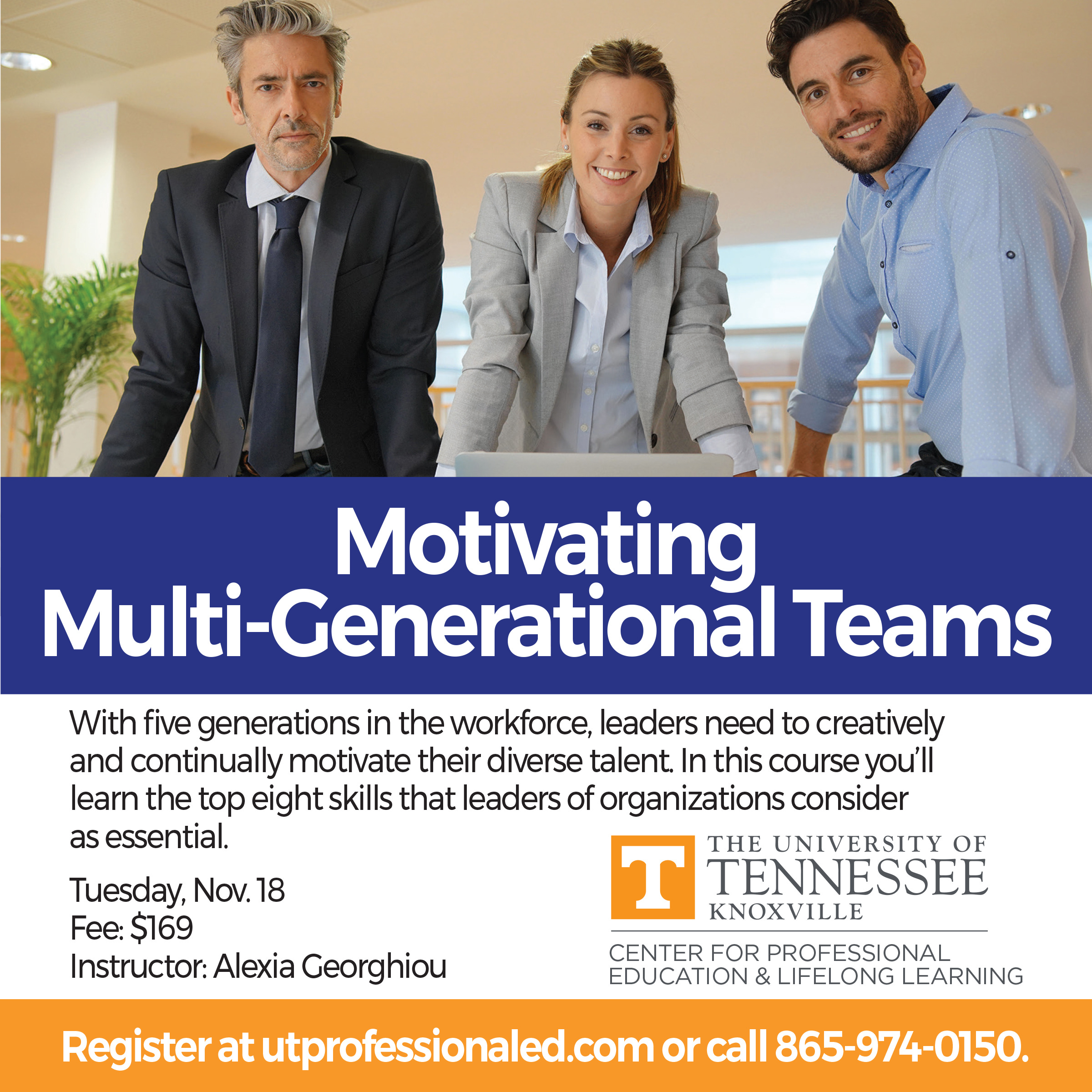
If you are in Knoxville, Tennessee or surrounding areas, join me for my in person class, Motivating Multigenerational Teams, at the University of Tennessee
Thursday November 18, 2025
9am-noon
600 Henley Street, Suite 211
Knoxville, TN 37996Register http://bit.ly/3YOSWrf